
Why "Dancer in the Dark" Challenges Everything We Know About Musicals
A fleeting glimpse into Utopia

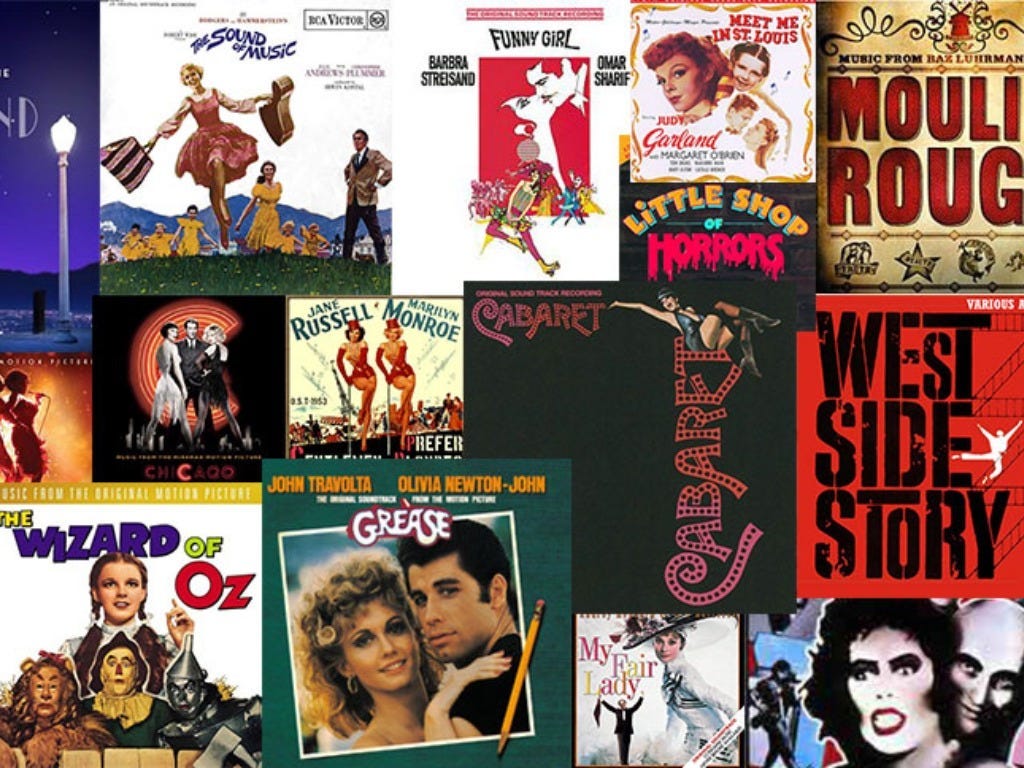
I grew up watching musicals, and each time, I was left with a sense of joy and peace. For me, musicals were a gateway to an alternative world where everything was brighter and more energetic. Watching them allowed me to escape reality for a few hours, immersing myself in a realm of song, dance and vibrant colours. Musicals like The Sound of Music, Singing in the Rain, An American in Paris, Seven Brides for Seven Brothers and Mama Mia!, are just a few examples that come to mind. While some have tragic endings, most musicals conclude on a happy note, with songs throughout the film leaving the audience feeling optimistic and uplifted.
So, when I watched Lars von Trier’s Dancer in the Dark it took me by surprise. The film revises the musical genre, differing in both content and form, leaving the viewer feeling depressed and pessimistic rather than optimistic.
Lars von Trier & “Dance in the Dark”
In the 1990s, Lars von Trier, and other filmmakers, created a movement called Dogme 95 which aimed to circumvent the rules of conventional filmmaking, by breaking down any form of artifice used in films, to return to a more truthful form of cinema. Dancer in the Dark is part of this movement and tells the story of Selma, a Czech immigrant, who suffers from a genetic condition that will eventually leave her blind. She works in a factory in the United States, to save up for her son’s operation as he suffers from the same condition. The viewer follows her as her condition worsens, and despite being a musical, the film reaches no happy ending.
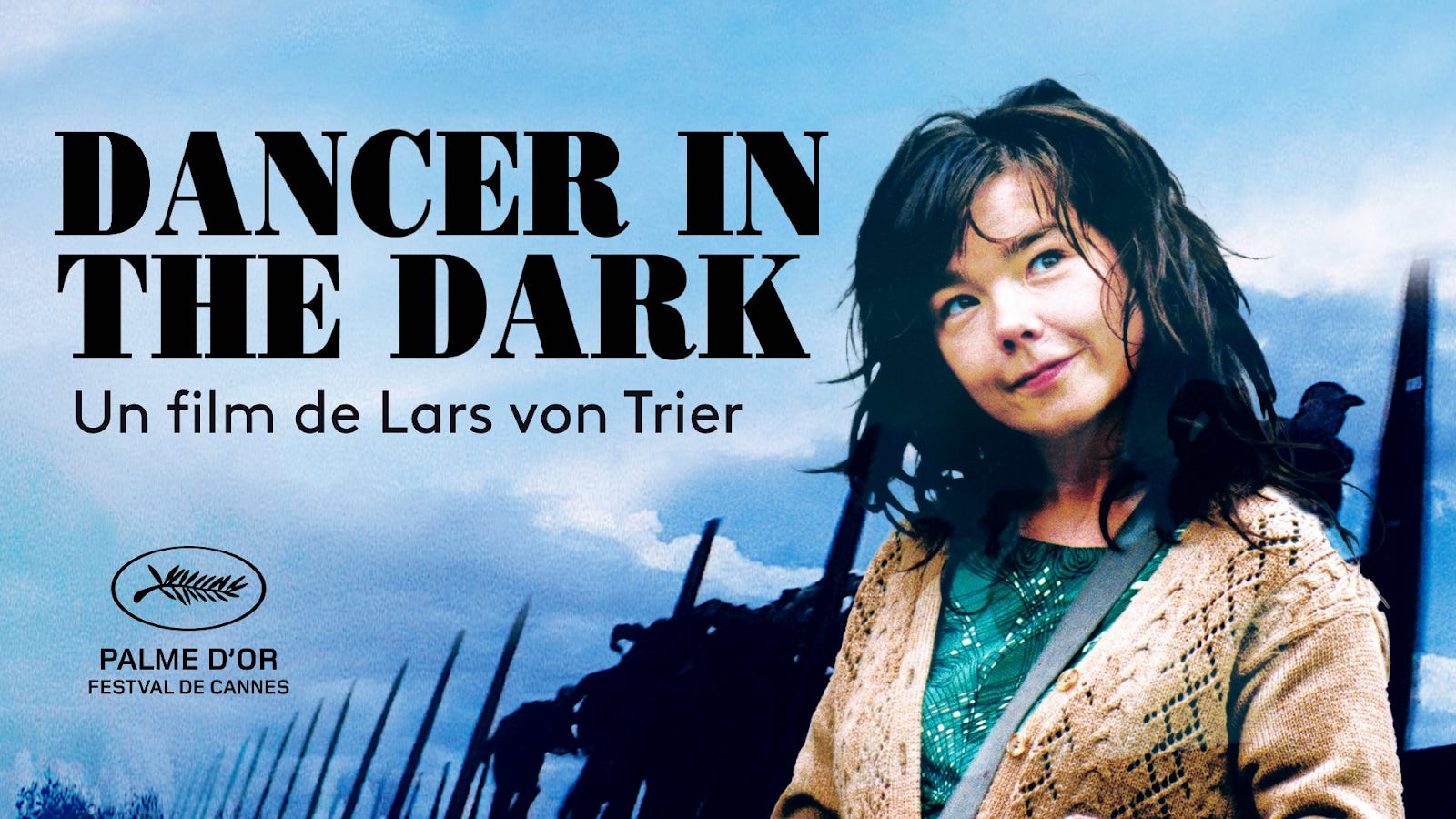
Throughout the film, characters launch into songs and dance routines, offering both the viewer and the main character a temporary escape from the brutal narrative world – much like most Hollywood musicals. However, the utopian resolution suggested by these subjectively constructed musical segments does not last. Once the songs are completed, the viewer is thrust back into the harsh reality of Selma’s life. Although Selma escapes into a world of songs and dance routines, she cannot evade her fate. The harsh reality she faces outweighs the power of music and dance. In a way, this serves as a critique of the musical genre, which often suggests that problems can be solved through the medium of songs.
An unconventional musical
Contrary to conventional musicals, Trier’s film exhibits a distinct dynamic that sets it apart. The movie alternates between a documentary-like style for the narrative and traditional musical numbers. During narrative segments, the use of a handheld camera creates an impression of a homemade film, as if we are witnessing events recorded by an observer, rather than a work of narrative fiction crafted by a filmmaker. The absence of dollies or mechanical shots avoids any sense of artificiality, presenting the film as a direct reproduction of reality. Consequently, when musical numbers erupt, we are automatically reminded of their artificiality, prompting us to think critically and engage with what we are seeing.
Moreover, while conventional musicals often present narrative segments with pleasant aesthetics that depict a world seemingly better than our own, Dance in the Dark offers a stark contrast. The narrative world we encounter serves as a reminder of the dreadful realities of our own. This is exemplified when the musical number “Cvalda” abruptly ends, immediately thrusting us back into Selma’s dreadful life, and reminding us of her impending fate. Unlike conventional musicals, Dance in the Dark does not attempt to reconcile the difference in aesthetics between the narrative segments and the musical numbers - it actually emphasizes the gap between the two worlds.
Unlike conventional musicals where musical numbers advance the narrative and characters seem unaware they are singing and dancing, Dance in the Dark presents a stark contrast. The musical numbers appear disconnected from narrative events, failing to contribute to the story’s development. For instance, “Cvalda” does not address Selma’s problems, including her impending blindness, her need for extra shifts and her financial struggles. The lyrics seem disconnected from the story, offering no solutions or plot advancement.
Moreover, we observe that the musical number “Cvalda” is triggered by the diegetic sound of factory machines and ends with the violent noise of a machine breaking. This suggests that the musical segments, including “Cvalda”, are subjectively constructed within Selma’s mind rather than occurring in the narrative world. These numbers are non-diegetic, existing only in Selma’s imagination - they are the result of an eruption of mentally subjective narration. Once over, it is as if they never happened, a departure from conventional musical narratives.
“Cvalda”: A glimpse into the feeling of Utopia
However, during their occurrence, these musical numbers generate utopian feelings, allowing viewers to experience what it would feel like to be in a better world. “Cvalda” exemplifies this. In “Entertainment and Utopia” Dyer argues that musicals do not present models of utopian worlds but rather embody the feelings of utopia. He states, “Utopianism is contained in the feelings it embodies. It presents, head-on as it were, what utopia would feel like rather than how it would be organized” (273). Dyer attributes this utopian feeling to the nonrepresentational signs used in the segment, such as colour, movement, rhythm, and camerawork.
“Cvalda” illustrates this through heightened, vivid colours and stronger, brighter lighting, creating a stark contrast with the bleakness and dimness of the narrative world. After forty minutes of a bleak and depressive atmosphere, the sudden appearance of “Cvalda” with its music, rhythm, colours, dance routines and singing, offers viewers a sense of relief. It allows them to experience what it would feel like to be in a better place, free from worries. The viewer gets a glimpse into the feeling of utopia.
However, as soon as the song ends, viewers are abruptly thrust back into the bleakness and harshness of Selma’s world, shattering any sense of utopia they might have felt. The audience is left feeling pessimistic and hopeless rather than joyful and optimistic, prompting them to reflect on their own reality. In essence, Dancer in the Dark is a musical that shows how musical numbers like “Cvalda” only bring temporary solutions to the problems faced in the narrative world. It serves as a critique of the musical genre that implies that problems can be solved through songs.
Lars Von Trier: A thought-provoking filmmaker
This revision of the musical genre complicates its conventions, producing a surprising new experience for the audience, and leading them to approach musicals differently. Lars von Trier is a fascinating filmmaker with a distinct style that I have yet to encounter in other works. His films challenge viewers to confront and examine society and individuals. For instance, Dogville, another of his acclaimed movies, uses characters, mise-en-scène, cinematography and plot, to expose the twisted moralities of humans and their ability for malice and hypocrisy. Dogville stands as a parable about human nature.
Sources:
Trier, Lars V. Dancer in the Dark. Denmark, 2000.
Dyer, Richard. “Entertainment and Utopia.” The Cultural Studies Reader, edited by Simon During, Routledge, 1993, pp. 271-283.